 Nolan Transportation Group
Transforming NTG as Preferred Shipper & Carrier Partner
Modernized legacy logistics platform, enabling self-service for 14,000+ shippers and 80,000+ carriers through the Beon digital platform — resulting in 4x mobile adoption, ~10% efficiency gains, consistent experience across devices & applications, and significant revenue growth.
Context & Business Challenge
Transportation Insight Holding Company (TI) combines industry-leading logistics providers Transportation Insight and Nolan Transportation Group (NTG), ranking among North America's top logistics companies. NTG services more than 14,000 shippers and 80,000 carriers through its proprietary Beon digital logistics platform.
The project was initially classified as "in red" due to fragmented legacy systems creating friction across all user groups:
Shippers & Carriers
No self-service capabilities or mobile access, forcing complete dependency on Customer Sales Representatives for routine tasks and updates.
Customer Sales Representatives
Critical data spread across multiple legacy systems, inconsistent interactions, and dense tables (10–15+ columns) increased cognitive load, slowed task completion, and drove frequent escalations.
Design Team
Lacked standardized processes, tools, and access to customer-facing applications, resulting in inconsistent deliverables, rework, and delayed releases.
Result: High escalation volume, slow response times, and fragmented experiences began to erode customer trust and posed a risk to NTG’s competitiveness in an increasingly crowded logistics market.
My Role & Responsibilities
UX Manager
I led UX for NTG’s multi-year platform modernization, responsible for defining design strategy, scaling the team, and ensuring consistent experience delivery across internal and external products.
I led a 15-member global design team across four countries, partnering closely with product, engineering, QA, and client stakeholders to transform fragmented legacy systems into a cohesive, scalable platform.
Key areas of ownership
UX Strategy & Governance
Built and led a cross-functional design team (product, visual, and content designers), recruiting, mentoring, and delegating work to support parallel product streams.
Team Leadership & Scaling
Defined UX strategy aligned with business objectives, established design sign-off checkpoints, and ensured experience quality across all modules before releases and client demos.
Design Systems & Process
Established standardized design processes and evolved the design system to improve efficiency, consistency, and collaboration between designers and developers.
Cross-Functional Delivery
Partnered with Product Managers, Engineers, QA, and clients to translate complex business requirements into intuitive, end-to-end experiences across web and mobile platforms.
This role required balancing strategic direction, delivery execution, and organizational change, while operating at scale across multiple user groups and markets.
Key UX Decisions
Each design decision was driven by the need to scale operations while reducing cognitive load and improving speed-to-decision across diverse user groups.
Unified Command Center for Sales Representatives
Centralized critical information and actions into a single workspace to reduce context switching, accelerate carrier matching, and enable faster deal closure.
Exception-Based Workflows
Shifted the experience from constant monitoring to exception-driven alerts, allowing sales teams to focus on high-impact decisions instead of navigating multiple legacy systems.
Progressive Disclosure for Complex Logistics Data
Designed the interface to surface only the most relevant information by default, with secondary data available on demand—reducing cognitive load while preserving depth for power users.
Responsive, Mobile-First Carrier Experience
Built a responsive and mobile-first experience that prioritized only essential information for carriers, enabling faster responses based on truck availability, lane preferences, and real-world constraints.
DesignOps Maturity as a Scaling Lever
Established standardized design processes and a unified design system to improve consistency, reduce rework, and enable faster, more predictable delivery across teams.
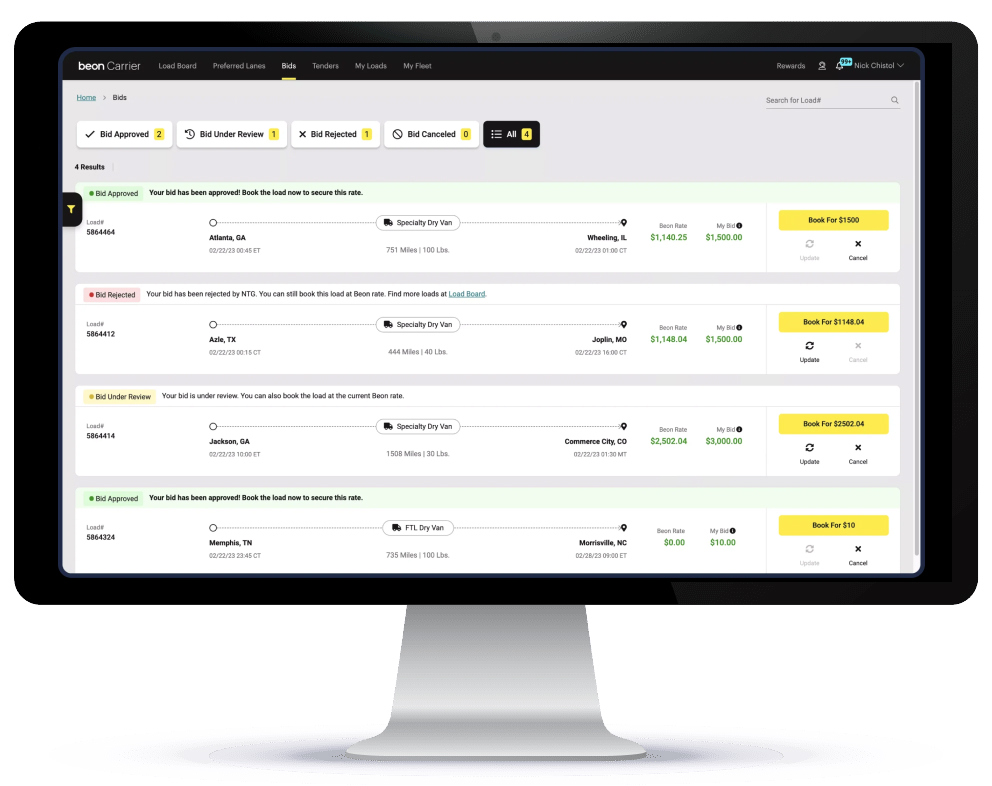
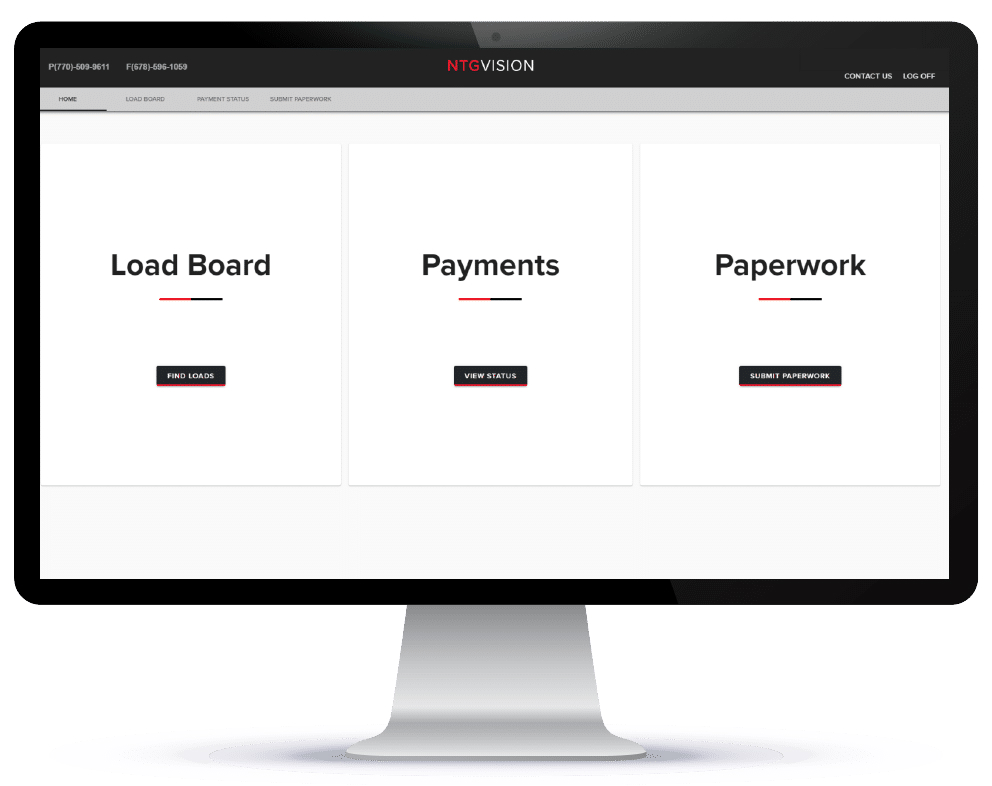
Before & After: Legacy vs. New Design
Drag the slider to compare the legacy NTGVision interface with the modernized Beon Carrier experience.
Beon Carrier Web App — New Design
- Clean, organized layout
- Relevant loads based on preferences
- Responsive design for all devices
- Track & Trace for transparency
- Consistent experience across 60+ modules
- Intuitive navigation and reduced learning curve
NTGVision Web App — Legacy
- Cluttered interface with all loads displayed
- Desktop-only, no responsive design
- Finding the right deal took too long
- No mobile app (competitors had mobile)
- Inconsistent interactions across modules
- High dependency on sales reps
Outcomes & Measurable Impact
(Exceeded launch targets)
(Operational efficiency gain)
(Reduced learning curve)
(Positive business impact)
NTG initially projected modest mobile adoption in the first quarter following launch. Actual adoption exceeded expectations by 4×, driven by responsive design and self-service capabilities that reduced reliance on Customer Sales Representatives.
In parallel, unifying over 60 UX modules under a shared design system improved consistency across the platform and contributed to measurable gains in sales productivity and operational efficiency.
Stakeholder Perspective
"The design is fantastic, easy to digest, and more intuitive than our legacy system."
"The new design made my life easier..."
"Layout is clean and not too busy, easy to navigate. Well organized and clean vs the current legacy system."
NTG & Cognizant Leadership praised the team for resilience in turning around a project that was "in red." Reduced escalations and improved delivery quality demonstrated the value of investing in DesignOps and user-centered design.
Leadership Takeaway
Scaling UX in a complex enterprise environment requires systems thinking, cross-functional alignment, and disciplined change management. The most impactful decision in this transformation was establishing DesignOps early. By introducing a shared design system and formal UX sign-off, we eliminated inconsistencies within weeks and allowed the team to focus on solving meaningful user problems rather than reconciling visual differences.
Strong partnerships with Product, Engineering, QA, and client stakeholders turned a high-risk initiative into a successful platform transformation—one that met both user needs and business expectations at scale.